Dublin, Ohio · Columbus metroBuilding software since 2008AWS Select Tier Partner

(614) 768-3887

Give Your Legacy Software a New Life

Outdated systems create risk, waste, and user frustration. QStart Labs helps businesses modernize their existing software using scalable, cloud-native technologies — without disrupting your operations.

Get a Project Estimate

For SMBs whose core system has aged out, startups replacing a rushed first build, and enterprises bringing legacy applications onto modern, secure, cloud-native architecture.

Why Modernize?

If any of these sound familiar, it might be time for a modernization strategy:

  • Your current system is hard to maintain or scale
  • Your users are frustrated by outdated UX
  • Your infrastructure costs are growing
  • You want to add new features or APIs
  • Your platform can't meet today's security standards
Our Modernization Approach

  1. Technical Audit

    We evaluate the current architecture, codebase, and bottlenecks.

  2. Modernization Strategy

    Options like lift-and-shift, refactor, replatform, or rebuild — depending on your needs.

  3. Incremental Refactoring

    We upgrade components while keeping core functionality intact.

  4. Cloud-Native Migration

    Move to AWS with autoscaling, containerized services, and improved monitoring.

Modernization Solutions

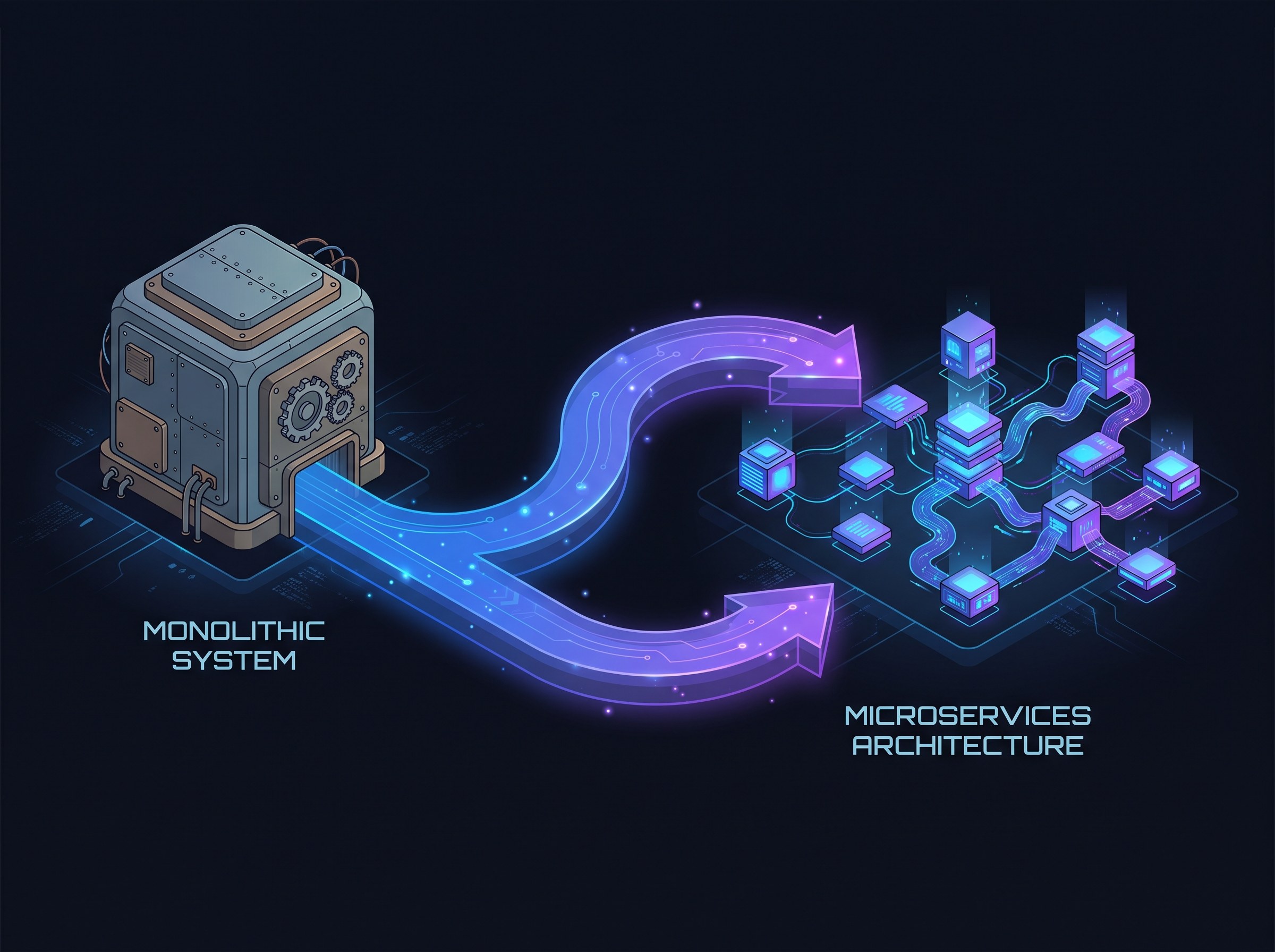
Monolith to microservices migration
Legacy system refactoring (PHP, .NET, Java, etc.)
Frontend refresh with React or Vue
Database redesign (PostgreSQL, DynamoDB)
Enhanced authentication & API integrations
They definitely are professionals and experts in their field, allowing us to be professionals and experts in ours! Not only does our new website look great and boost our image, it is also highly functional and boosts our organization's productivity.
Amy SzaboDirector of Development, ECDI

App Modernization — FAQ

Application modernization is the work of bringing an existing system up to a current, supportable architecture without throwing away the business logic already in it. In practice that means some combination of replacing an unsupported framework or runtime, moving off a server nobody wants to touch, restructuring a database that has outgrown its design, and putting the whole thing on infrastructure that can be deployed and recovered predictably. It is distinct from a rewrite: the goal is to keep the system that runs your business running while the parts underneath it change.
Usually refactor, incrementally — full rewrites are expensive, slow, and carry the risk that the replacement never quite catches up to what the old system already does. Most legacy applications hold years of business rules that exist nowhere else, including in anyone's head. We typically replace the riskiest pieces first while the current system keeps serving users, and we let the technical audit say where a genuine replacement is cheaper than continuing to patch. Sometimes the answer really is to rebuild, and we will tell you that when it is.
Yes — that constraint shapes the whole approach. Work is sequenced so the running system stays available: new services go up alongside the old ones, traffic moves across in stages, and each step is reversible if something behaves unexpectedly in production. Short planned maintenance windows are sometimes the pragmatic choice for a database migration, but they are scheduled with you rather than sprung on you, and "the business keeps operating" is treated as a requirement of the project, not a hope.
The audit is an honest read on what you actually have: the state of the codebase, the frameworks and runtimes that are out of support, the infrastructure and how it is deployed, the obvious security exposure, and where the system will break next as usage grows. You get back a written assessment with the problems ranked by risk and a recommended sequence — what to fix now, what can wait, and what is not worth fixing at all. It is a real deliverable, and it is useful even if you take it to another firm.
It depends far more on how tangled the existing system is than on how large it is, which is why we scope from the audit rather than from a description. Incremental modernizations are typically measured in months and structured so value lands early — the riskiest or most painful piece is usually addressed first, so you are not waiting until the end of the project to see a return. A sequence and an estimate range come out of the audit before any build commitment.
Both are treated as first-class parts of the project rather than an afterthought at the end. Data is migrated with a tested, repeatable process and a rollback path, not a one-off script run on a weekend. Existing integrations — CRMs, accounting systems, payment platforms, industry-specific tools — are inventoried during the audit, because in older systems they are frequently undocumented, and a modernization that quietly breaks a nightly export to accounting is not a success.

Your Software Doesn't Have to Hold You Back

Start with a free technical audit — an honest read on what you have, and the fastest path to a modern, maintainable system.

Prefer to reach out directly?

Rather skip the form? Grab a free 30-minute discovery call and we'll talk it through together.

hello@qstartlabs.com(614) 768-3887
6233 Riverside Drive, Suite 2S, Dublin, OH 43017 (Columbus metro) · serving clients nationwide

We reply within one business day.

Your information is kept private and will never be shared.